
Your first barefoot step – Start safe and at your own pace
Switching to barefoot footwear feels freeing for many people. One single step – and suddenly the surface feels different: surer, more natural, more grounded. Before you slip into your first pair, we’ve prepared 7 key recommendations and a gentle 7-day plan to guide your first steps – safely and comfortably.
1. What happens in your foot when transitioning to barefoot
Conventional shoes guide the step. Barefoot lets it happen. Your foot is simply remembering what it already knows.
And it knows a lot:
- Muscles wake up: they worked differently (or less) in standard footwear, so now you might feel them more.
- Your arch activates: instead of external support, your own structures take the lead again.
- Nerves receive richer feedback: you can read the ground in much finer detail.
- Gait naturally changes: calves work more, steps gradually shorten.
It’s like waking up after a long nap – strange at first, maybe a bit tiring for a moment – but sensation returns to natural again.
2. 7-Day barefoot starter plan
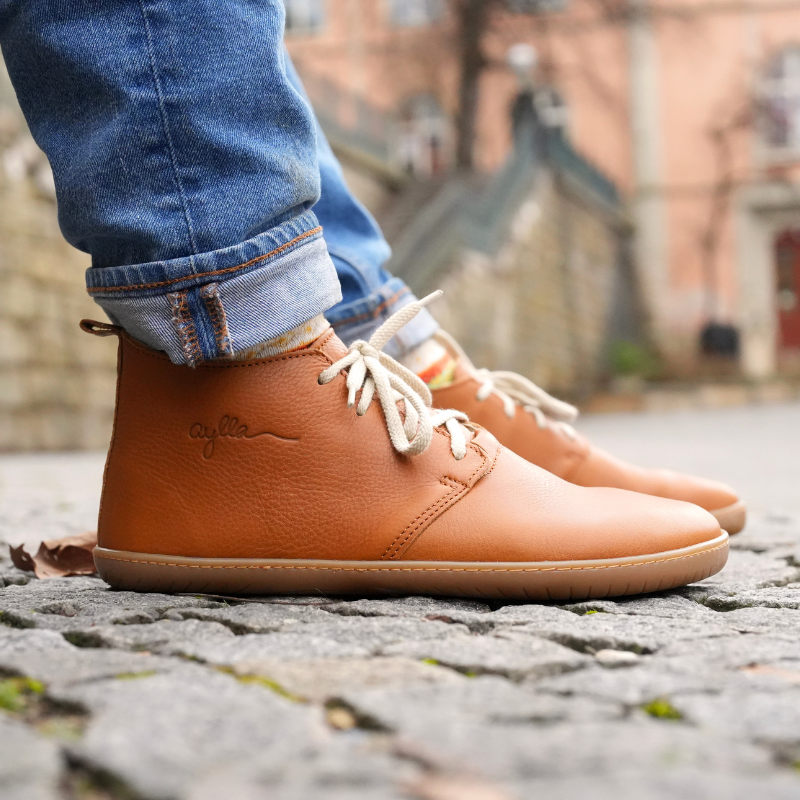
- Day 1–3: 30–60 minutes a day, indoors or on soft ground. Listen to your feet.
- Day 4–6: 1–2 hours, maybe short walks (e.g., commute to work and back).
- Day 7 onward: Gradually extend time. Slow is smooth.
A good rule of thumb: If your feet feel pleasantly tired, great! If the pain is sharp or one-sided, take a break.
Barefoot isn’t a race. It’s about how good you feel in motion – not how fast you get there.
3. Best places to begin barefoot
- Forest floors, grass, or home carpets – soft surfaces absorb part of the impact and give your body time to adapt.
- Hard surfaces like pavements are fine, too – just take extra time easing into them.
4. Choose shoes for you — not trends
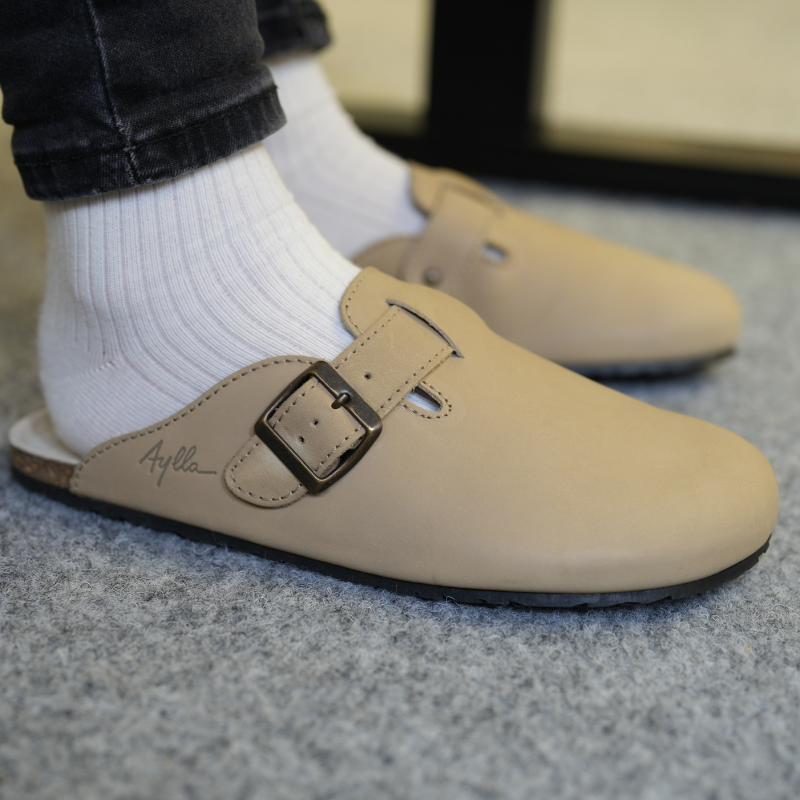
Don’t get caught up in “the most barefoot” or “the coolest model right now.” Your real question is: Where and how will you actually walk in them?
Common fears — everyone shares them:
Fear #1: “Will hard floors hurt?”
→ Start with a slightly thicker, grippy GRIP sole, so you don’t go from zero to 100. For example models by Aylle:
- Everyday: Uma Grip
- First Winter: Chiri Fur
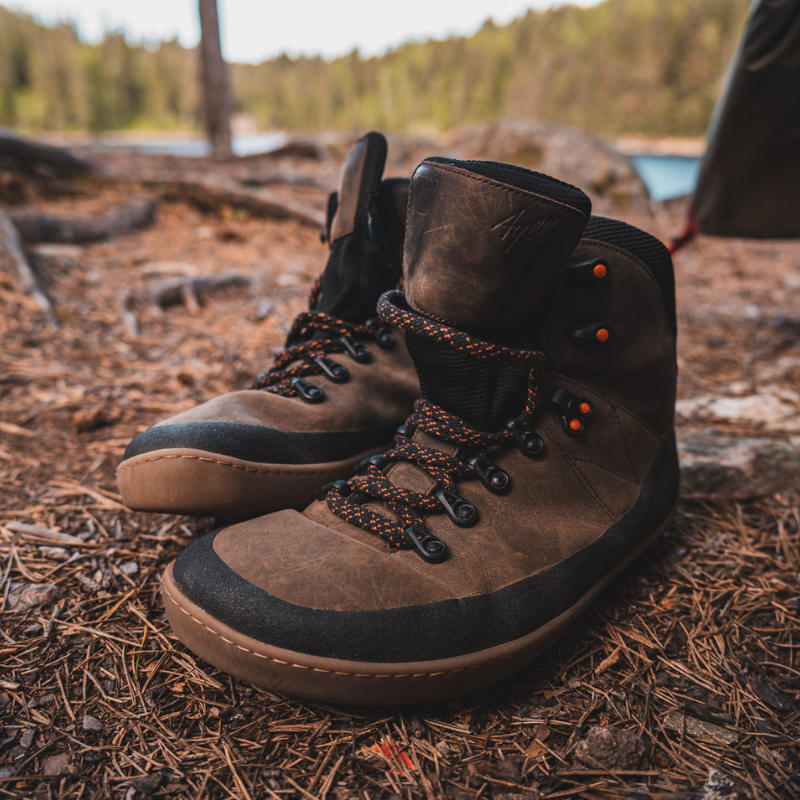
- Treks: Mitu Trail
Fear #2: “Cold feet in winter?”
→ In regular shoes, warmth mostly comes from insulation. The first winter in barefoot boots may feel cooler at times – your foot is re-learning how to move and warm itself naturally. Soon, you’ll find a new rhythm and your body will adapt.
Fear #3: “What if I buy shoes I won’t wear?”
→ The safest start is simple: indoor barefoot slippers. You wear them daily, but briefly. No risk, total gain.
5. 3-Minute foot routine
Just 3 minutes a day – even while brushing your teeth:
- Spread your toes consciously
- Go up on tiptoes 10× (strengthens arches and calves)
- Pick up small objects with toes (even a sock is enough)
- Quick foot massage (by hand or tennis ball)
6. When it hurts — what now?
- Pleasant fatigue = normal
- Dull pain after long walks → reduce wear + add exercises
- Sharp or one-sided pain → rest + consult a therapist if needed
There are many muscles in your feet. They’ll talk to you if overloaded too soon – just like any muscle group.
7. Common beginner mistakes
- Transitioning too fast
- Ignoring body signals (“pushing through pain”)
- Choosing wrong shoe size
- Picking the thinnest sole right away
These are all easy to fix – once you know.
Barefoot isn’t a trend – it’s a return to nature
Maybe you’re here because of back pain. Or curiosity. Or you simply want to walk differently.
Whatever the reason:
Your feet are stronger than they look. Barefoot just lets them do what they’ve always known how to do.
Take it slow. Enjoy the journey. No fight – no compromise.
And we at Aylle will gladly walk it with you.