
How many steps a day does a physiotherapist recommend? Maybe fewer than you think
10,000 steps a day. A number flashing at you from apps and challenges. Is it really the benchmark of health we should aim for? We asked physiotherapist Zuzana Spitzerová. And her answer might feel surprisingly liberating.
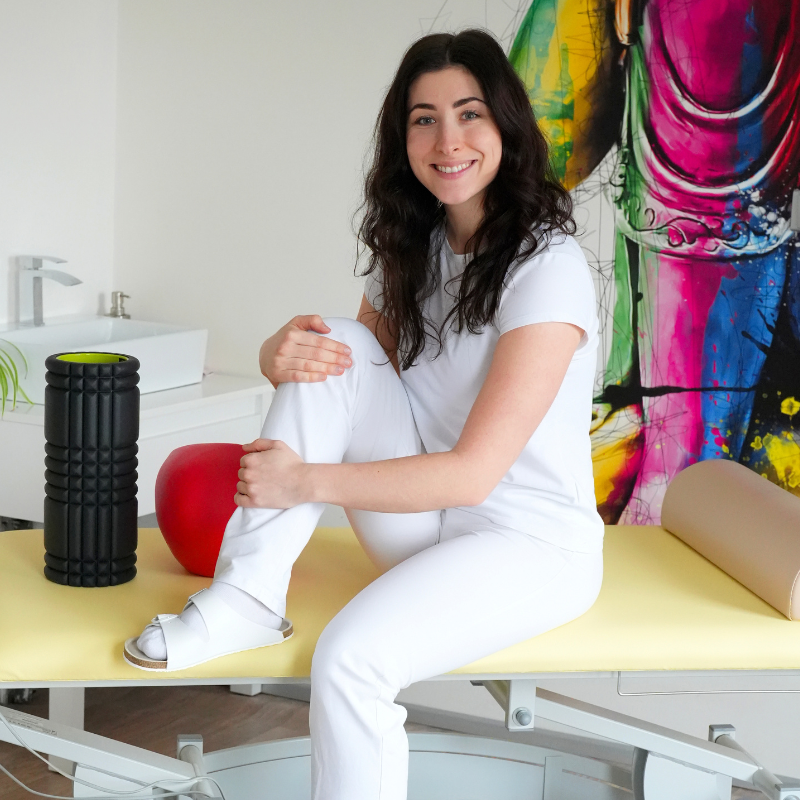
Physiotherapist Zuzana Spitzerová
“I don’t like working with universal numbers.”
“I don’t have a completely clear-cut answer. In general, I don’t like working with universal numbers — whether it’s step counts or exercise repetitions. 10,000 steps can be good motivation for someone who otherwise spends most of the day sitting. But it’s not a ‘magical’ number or a guarantee of health.”
Relief, right?
From a physiotherapy perspective, something else matters more:
“What’s essential is variety of movement throughout the day — changing positions, walking quality, muscle engagement, and strength training. Steps are great, but they’re not enough on their own.”
Why chasing numbers isn’t enough
Two people can walk the same 8,000 steps. One body feels better. The other starts to ache.
The difference lies in:
- pace
- terrain
- footwear
- foot function
- posture
1,000 mindful steps can be more valuable than 2,000 automatic ones. And this is where the story of the foot begins.
What does a physiotherapist say about footwear?
“The foot is a complex structure with many joints that need to work and adapt to the terrain while walking. If we restrict this ability long-term, its mobility may decrease along with its ability to actively engage.”
A specific example:
High heels significantly alter body alignment. They shift the center of gravity forward and limit natural walking mechanics and foot rollover.
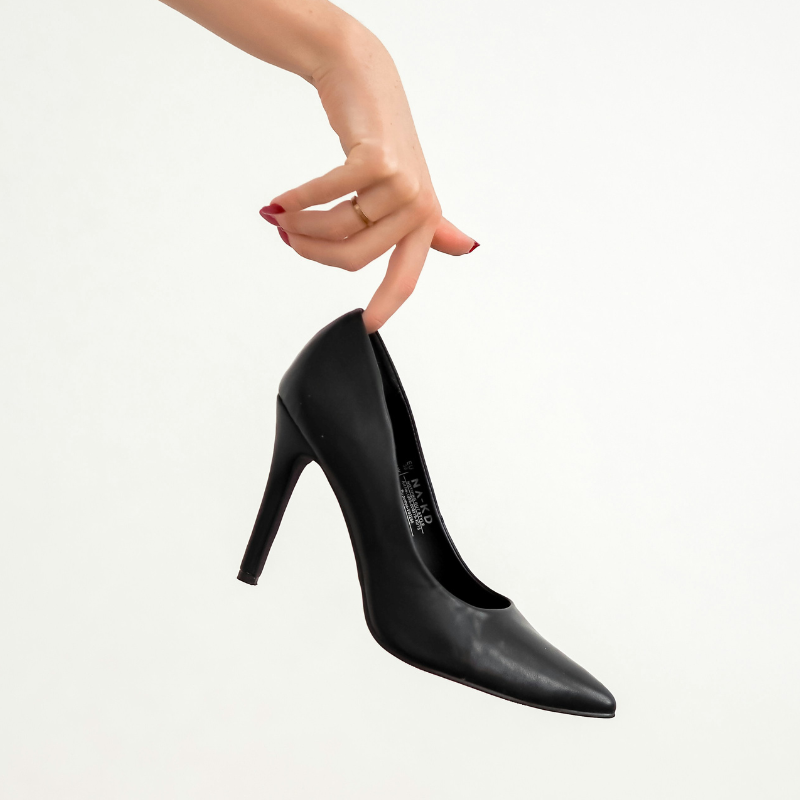
But it’s not just about heel height. It also matters how much space the foot has — especially the toes. “If the toes have enough space, they can actively participate in support and push-off, which contributes to stability.” Generous toe space and a flexible sole are key features of barefoot shoes – see for yourself, for example, in our barefoot sneakers.
But what happens when the foot doesn’t have that space or flexibility?
- “A narrow toe box restricts the natural position of the toes and their ability to actively support the body. Over time, this can contribute to deformities or weakening of the foot muscles.”
- “A very stiff sole also limits the natural elasticity of the foot and its ability to absorb impact. During walking, the foot should function as both an adaptable and flexible structure.”
Sensory feedback is important too:
“Highly cushioned or rigid (stiff) footwear may also reduce sensory feedback from the foot — meaning information about how and where we step. This may lead to less mindful and sometimes heavier walking patterns.”
An important context:
“Footwear is not the only factor. Walking quality is influenced by posture, muscle activity and overall lifestyle.”
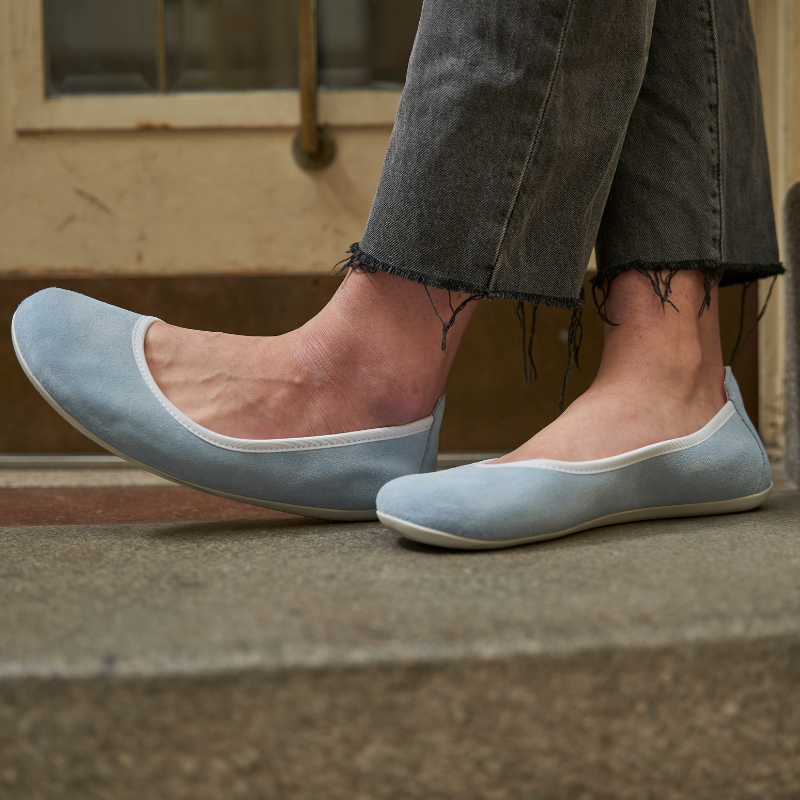
Swap high heels for barefoot ballerinas.
How can you tell if your walking isn’t fully efficient?
“‘Bad’ walking is a relative term — the body often finds a functional strategy based on its current capabilities.”
Still, there are signals that may indicate inefficiency:
strongly turned-out toes
uneven shoe wear
heavy, loud steps
recurring pain (feet, knees, hips, lower back, neck)
“If someone isn’t sure or is experiencing discomfort, it’s appropriate to consult a physiotherapist. An individual assessment of walking and movement patterns can help identify specific causes and propose tailored solutions.”
So how many steps are enough?
As a general guideline:
- 4,000–6,000 → basic health benefits
- 6,000–8,000 → very solid daily movement
- 8,000–10,000 → active lifestyle
More than 10,000? Great — if your body is used to it.
But more important than the number is:
✔ consistency
✔ variety
✔ quality of each step
✔ foot comfort
We invite you to try a small experiment: Take off your watch for a day. Slow down.
Notice:
contact of your foot with the ground
freedom of your toes
elasticity of your step
your breath
You may discover you don’t need more steps. Just more awareness in each one. Sometimes it’s enough to change what you wear on your feet — and your step starts to make more sense.
Sources used:
https://www.nih.gov/news-events/nih-research-matters/number-steps-day-more-important-step-intensity