
3 most common walking mistakes. Do you know how you walk?
Walking is so natural to us that we rarely think about it at all. Yet even this seemingly simple movement has its own “rules” – and if we break them over time, our body will eventually let us know, often through pain in the feet, knees, or back.
We often don’t notice bad habits because they don’t cause pain right away. In many cases, they are small things that repeat subtly with every step – and over time, these can become a problem. Which ones are the most common?
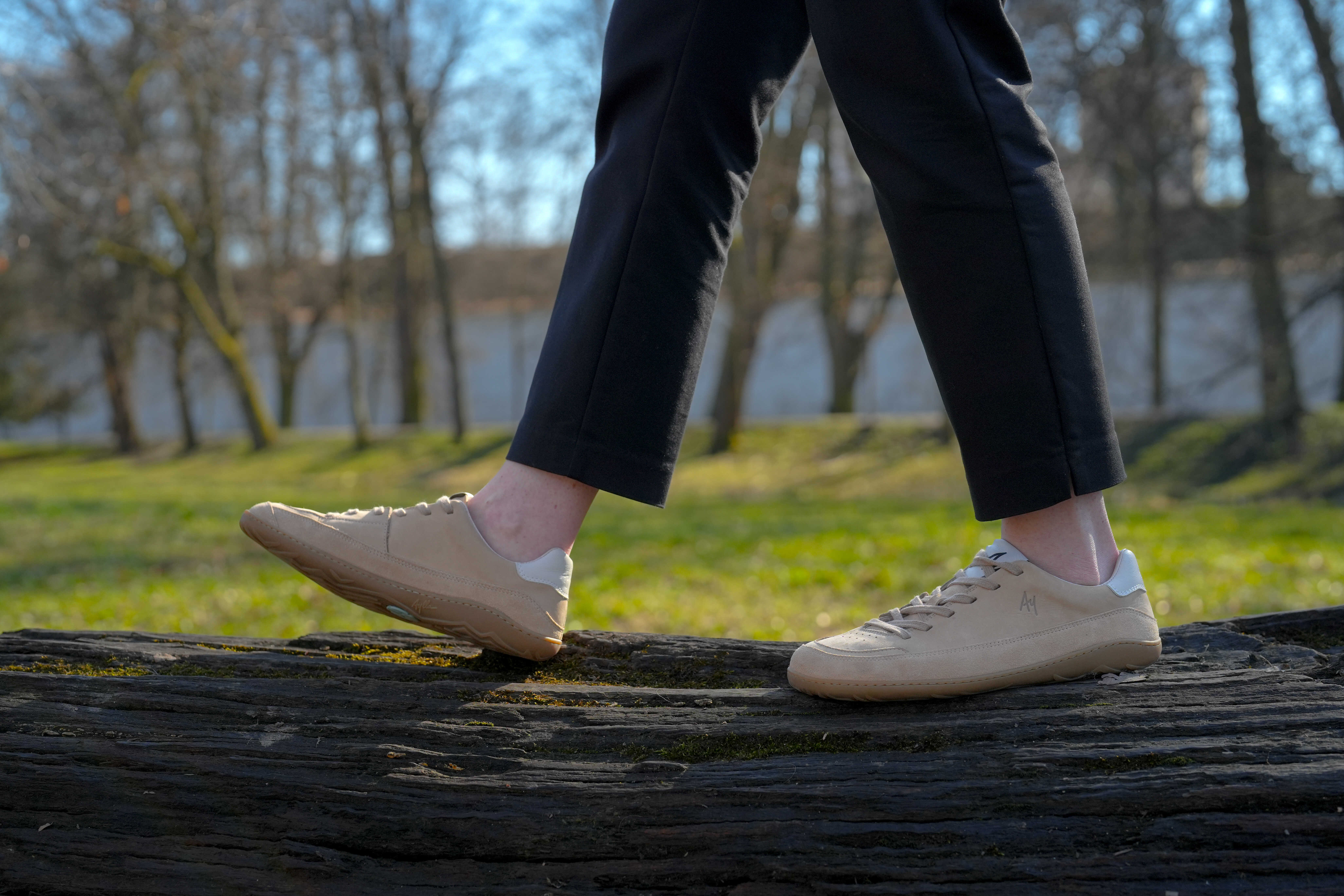
1. Taking steps that are too long
The foot lands far in front of the body, instead of working naturally beneath it. As a result, each step slightly slows your forward movement.
What it causes
- higher impact on landing
- greater strain on the knees
- less fluid movement
How to recognise it
- you feel like you’re stopping yourself while walking
- your step feels harder and less smooth
What helps
- notice whether your foot lands far in front of you or more under your body
- imagine someone gently “pulling” you forward by your chest – your body moves over the step
- slow down and consciously shorten your stride for a few steps – not by force, but by feel
- observe whether your steps become quieter and smoother
What’s the relationship between stride length and load on the knees and heel?
Explained by physiotherapist Zuzana Spitzerová:
“The longer the stride, the greater the heel impact. And because the knee is fully extended in this case, it absorbs the shock less effectively.
When we shorten the stride and land closer to the center of gravity, the heel receives less impact.
It also becomes easier to keep the knee slightly bent, which helps absorb the shock.
Besides stride length, other factors also play a role, such as knee stability, active push-off from the toes, and active work in the hips.”
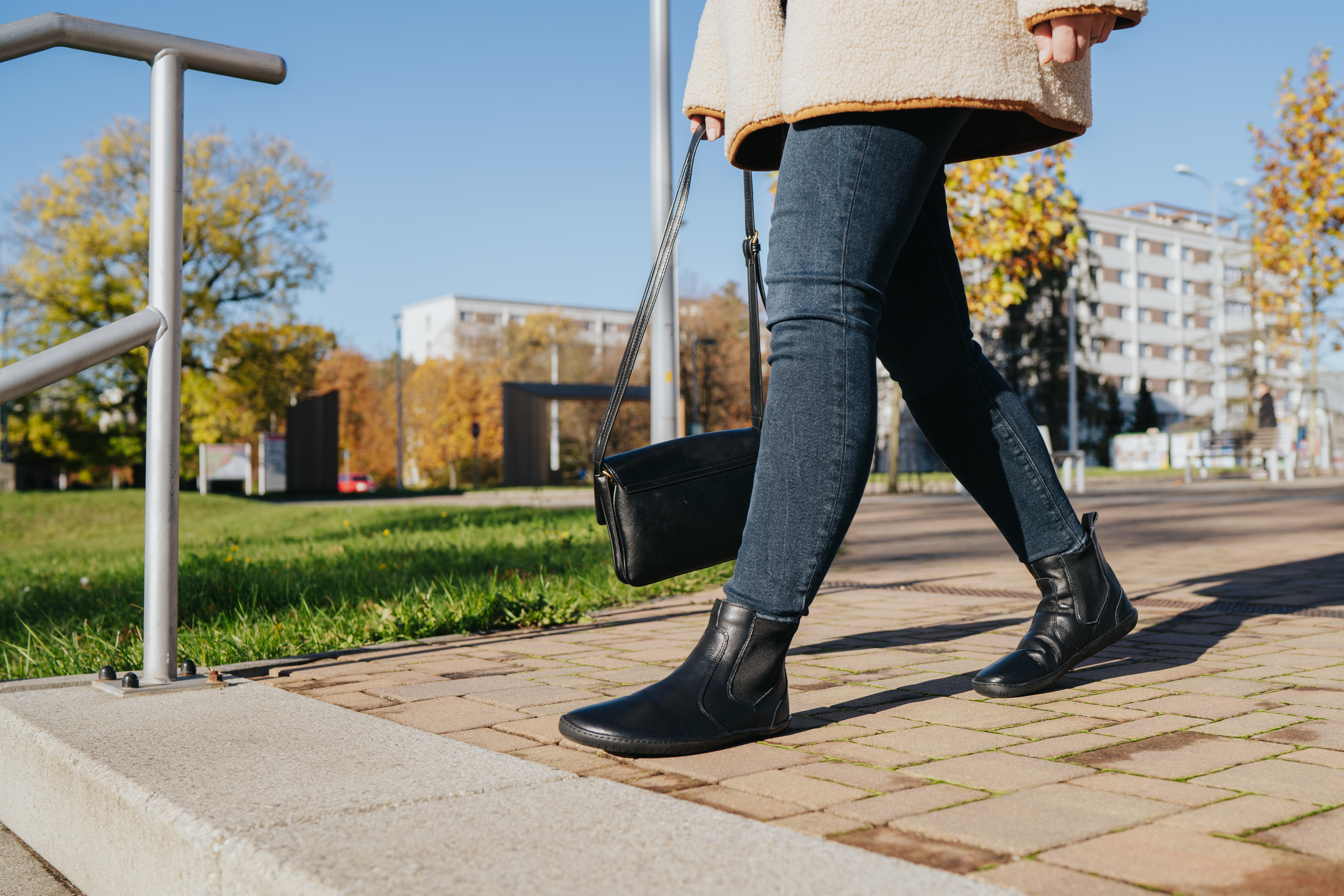
2. Inactive toes and feet
The foot is not just a surface that rests on the ground. It should be active while walking. If the toes remain passive and don’t participate in push-off, the foot loses both stability and strength.
What it causes
- reduced stability on landing
- weaker push-off
- increased strain on other parts of the body
Why it happens
- long-term wearing of narrow shoes – if shoes restrict the toes, the body stops using them, which then carries over into walking
- the foot is not used to being active – it is mostly “guided” by the shoe
- toes gradually lose strength because we don’t use them during everyday walking
What helps
- notice whether your toes slightly spread during push-off or stay tense
- for a few steps, try to gently “push off” the ground through your big toe (not forcefully, just consciously)
- at home, barefoot, observe whether you can spread your toes and support yourself on them
- sometimes it’s enough to give your toes more space – for example in barefoot shoes – and the foot can start working again
|
Are you just starting with barefoot shoes? |
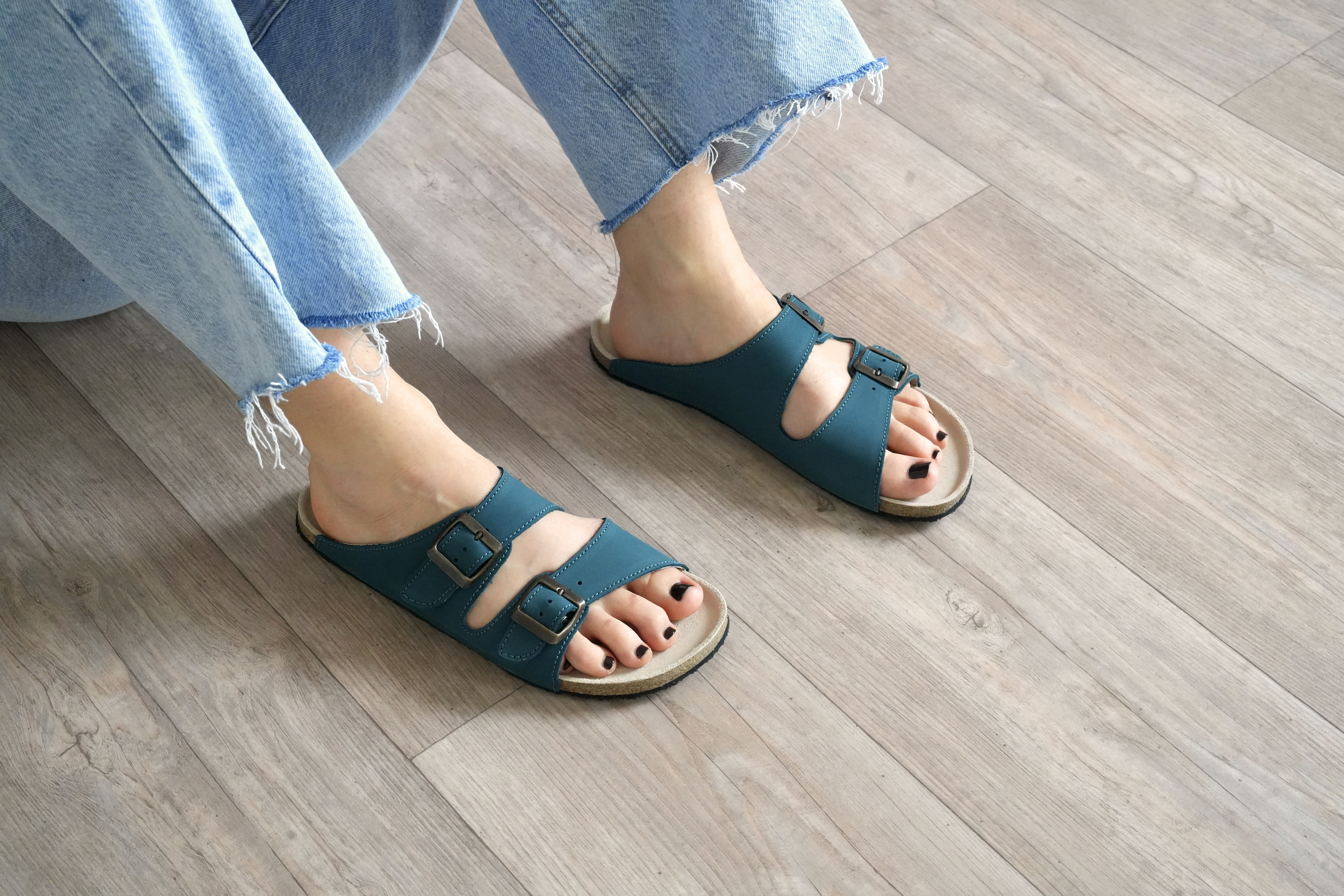
How important are toes for stability and push-off?
Answered by physiotherapist Zuzana Spitzerová:
“Toes play a key role in both stability and push-off. By spreading them, the support surface increases, and so does overall stability. But simply spreading them is not enough – they also need to be actively engaged.
During push-off, from a biomechanical perspective, the big toe is the most important. It significantly affects how efficiently the muscles around the hip work during extension. That’s why proper alignment of the big toe and function of the first ray are crucial. Conditions such as hallux valgus can disrupt this function.”
According to the physiotherapist, a layperson can only hardly recognise incorrect toe engagement while walking. However, signs may include conditions like transverse flat foot, calluses, or pain in the forefoot.
|
Learn to engage your toes “If you want to start actively using your toes during push-off, it’s best to start in a static position.
If you manage these basic positions, you can gradually move into motion and start engaging your toes while walking or running,” adds the physiotherapist. |
3. Hard landing (unnecessary impact)
Another common mistake isn’t about where you land, but how. The step is loud, hard, without natural cushioning. The body then has to absorb the impact higher up – in the knees, hips, or back.
What it causes
- joint overload
- greater fatigue while walking
- less fluid movement
How to recognise it
- you can hear your steps
- your walking feels heavy or harsh
- you get tired more quickly
What helps
- notice whether you can hear your steps – the quieter the step, the better the body absorbs impact
- slow down for a few steps and see if you can soften the landing, not forcefully “place” it
- imagine you’re not stomping into the ground, but flowing over it
- if you walk very fast, slow down – hard impact often relates to pace
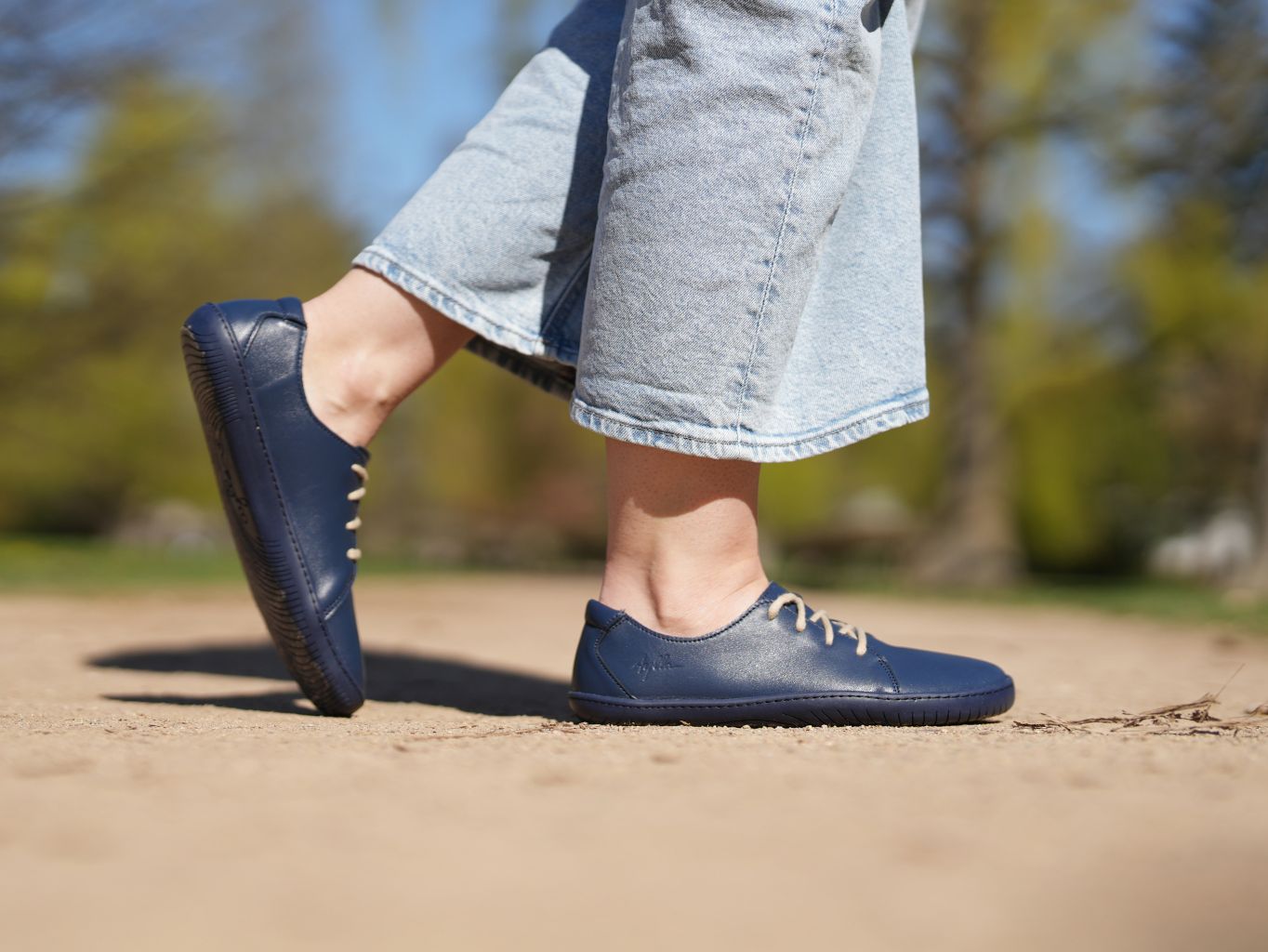
A physiotherapist explains how to recognise a proper landing:
“When we talk about walking, most people land on the heel. However, it should be soft and controlled, not a ‘hard impact’ in front of the center of gravity.
It’s important that after heel contact, the entire foot mechanism gradually engages – a smooth transfer of weight through the midfoot to the big toe, which ensures the final push-off. This sequence allows proper muscle function, efficient leverage, and good timing throughout the movement chain.
A healthy landing is therefore not just about what you land on, but mainly how and where – ideally as close as possible under the center of gravity, without unnecessary braking and with a smooth transition into push-off.
|
When it comes to running: |
How footwear affects your walking style
Footwear can influence your walking more than you might think. Some shoes restrict foot movement – for example, they don’t give toes enough space or dampen ground contact so much that we lose feedback.
Barefoot shoes, on the other hand, allow the foot to function more naturally. It’s important that footwear:
- respects the shape of the foot
- gives toes enough space
- allows natural movement
At Aylla, we believe that everyone should try barefoot at least once in their life.